
How Can Smart Manufacturing Platforms Improve Supply Chain Efficiency in 2026?
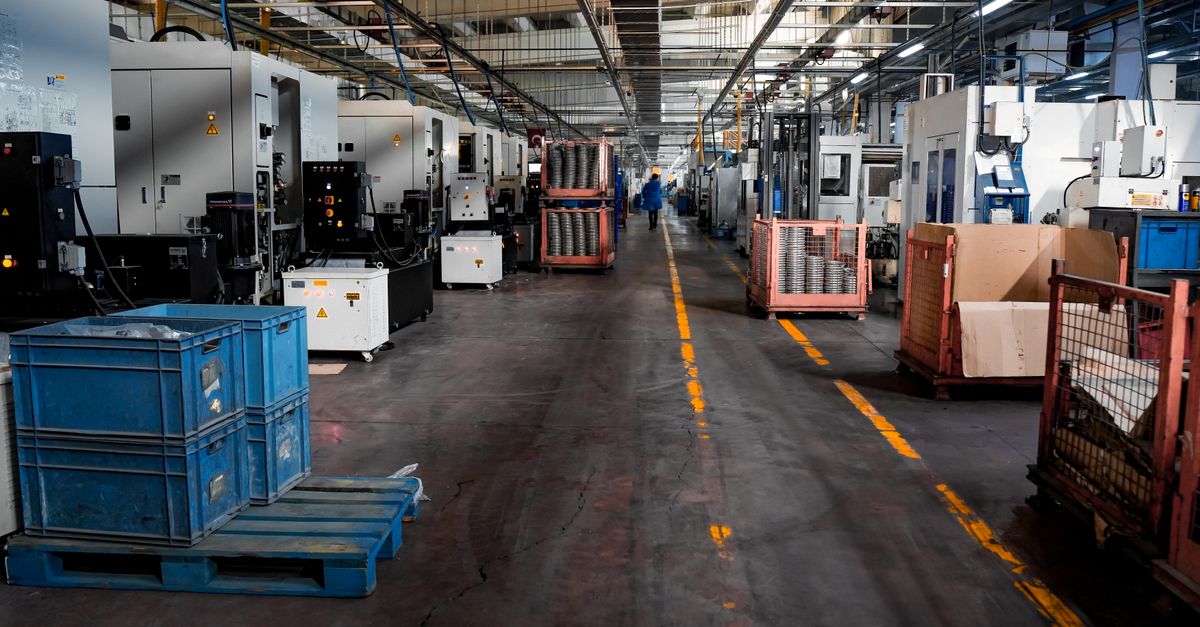
The manufacturing landscape is shifting faster than ever. In 2026, firms that adopt integrated smart‑manufacturing platforms are already seeing measurable gains in throughput, cost reduction and flexibility. As a founder of a supply‑chain technology company, I’ve watched firsthand how the right mix of AI, ERP integration and an up‑to‑date OEM directory can transform operations from siloed processes to a cohesive, data‑driven ecosystem.
1. The Current State of Smart Manufacturing
Smart manufacturing today is defined by real‑time visibility into production metrics, predictive maintenance, and adaptive scheduling. Companies that have moved beyond legacy PLCs toward industrial IoT (IIoT) sensors can capture machine health data every minute. However, many still struggle with fragmented data sources and manual reconciliation of inventory levels.
The transition is not merely about adding sensors; it’s also about creating an interoperable architecture that can ingest heterogeneous streams—OPC UA for legacy equipment, MQTT for edge devices, and RESTful APIs for cloud analytics. Edge computing has become a cornerstone, allowing preliminary data filtering and anomaly detection to reduce bandwidth costs while preserving critical insights for downstream decision making.
Key Characteristics of Mature Smart Manufacturing Systems
- End‑to‑end traceability from raw material to finished product
- Predictive analytics for equipment downtime
- Dynamic routing that adapts to demand shifts
- Automated compliance reporting aligned with industry standards
If your plant lacks any of these, you’re losing efficiency and competitive edge. The next step is aligning those capabilities within a single supply‑chain platform.
2. Why a Unified Supply Chain Platform Matters
A unified platform consolidates disparate systems—ERP, MES, WMS and vendor portals—into one interface. This integration eliminates the “copy‑paste” culture that often leads to errors and delayed decision making.
Beyond the obvious reduction in manual effort, a single source of truth enables cross‑functional teams to collaborate on the same data set in real time. For example, when a critical component’s lead time suddenly increases, procurement can instantly see the impact on production schedules, adjust routing, and notify sales—all within minutes rather than days.
Benefits of Consolidation
- Reduced data latency: Decisions based on real‑time feeds rather than nightly batch jobs.
- Lower IT overhead: One platform, one vendor relationship.
- Improved collaboration: Transparent visibility for suppliers and customers alike.
- Scalable architecture: Easily add new modules or expand to additional factories.
In my experience, companies that transitioned from multiple standalone systems to a single supply‑chain platform cut operational costs by 12% within the first year. The real win is the agility you gain when market conditions shift.
3. Integrating AI into the Manufacturing Loop
AI is no longer a luxury; it’s a necessity for predictive maintenance, quality control and demand forecasting. By embedding machine learning models directly into the production line, firms can anticipate issues before they occur.
The power of AI lies in its ability to surface patterns that are invisible to human analysts. In 2026, many organizations pair computer vision with reinforcement learning so that inspection systems not only flag defects but also suggest corrective actions in real time—such as adjusting the extrusion temperature or re‑calibrating a laser cutter.
Practical AI Use Cases in 2026
- Predictive maintenance: Sensors detect vibration patterns that signal impending failure.
- Quality inspection: Computer vision spots defects at 99% accuracy, reducing rework.
- Demand forecasting: AI models analyze seasonality, promotions and macro trends to adjust production schedules.
- Energy optimization: Smart algorithms shift workloads to off‑peak hours, saving on utility costs.
The challenge lies in data quality. Without clean, labeled datasets, even the best model will underperform. That’s why a robust supply‑chain platform must enforce data standards from the outset.
4. ERP Integration Challenges and Solutions
ERP systems remain the backbone of manufacturing finance and planning. Yet many legacy ERPs cannot natively communicate with modern IIoT devices or AI services. Bridging this gap requires a middleware layer that translates between protocols.
A common mistake is to treat integration as a one‑off project. Successful implementations view ERP as an evolving data hub, continuously updated through API gateways that expose financial and inventory tables in JSON format. This approach allows downstream analytics engines to consume the same data stream used by production planners, ensuring consistency across the organization.
Common Integration Pitfalls
- Synchronous vs asynchronous data flow: ERP batch jobs cause lag.
- Data duplication: Manual re‑entry creates errors.
- Security gaps: Legacy systems may not support modern authentication.
- Change management resistance: Users accustomed to spreadsheets hesitate to adopt new dashboards.
In my experience, deploying an API‑first integration layer that exposes ERP data as JSON endpoints drastically reduced development time. We also introduced role‑based access controls early, which accelerated user adoption by 30%. The key is to treat the ERP not as a silo but as a source of truth that feeds into the broader platform.
5. Building an OEM Manufacturer Directory for Agility
A dynamic OEM directory is essential for rapid sourcing and risk mitigation. By cataloguing approved vendors, their capabilities, lead times and compliance certifications in one searchable database, manufacturers can pivot quickly when supply disruptions occur.
The directory should support automated vendor onboarding through self‑service portals where suppliers upload certification PDFs, safety data sheets and performance metrics. An embedded workflow engine verifies completeness before granting access to the broader system, ensuring that every entry meets internal quality thresholds.
Features of a Robust OEM Directory
- Vendor performance metrics: On‑time delivery rates, defect rates.
- Compliance tags: ISO 9001, REACH, RoHS certifications.
- Geographic mapping: Visualize risk exposure by region.
- Contractual terms: Auto‑populate standard payment and delivery clauses.
In my experience, integrating a real‑time supplier scorecard into the platform allowed procurement teams to switch vendors within hours rather than weeks during a component shortage. This responsiveness directly translated into a 5% increase in on‑time order fulfillment. The directory should evolve with your supply chain; treat it as an asset, not a static document.
6. Implementation Roadmap and Next Steps
Transitioning to an integrated smart‑manufacturing ecosystem is a multi‑phase effort. Below is a practical roadmap that balances speed with risk mitigation.
Phase 1 – Foundation (0–3 Months)
- Audit existing data sources and map integration points.
- Select a middleware platform that supports REST, MQTT and OPC UA.
- Define data governance policies and security protocols.
- Set up an initial pilot with one production line to validate connectivity.
Phase 2 – Core Integration (3–6 Months)
- Connect ERP to the middleware; expose key financial and inventory tables.
- Deploy IIoT gateways on critical machines and start streaming sensor data.
- Build baseline AI models for predictive maintenance using historical logs.
- Create a lightweight dashboard for real‑time machine health monitoring.
Phase 3 – Advanced Analytics & Directory (6–12 Months)
- Implement real‑time dashboards for plant floor managers.
- Launch the OEM directory with vendor scorecards and compliance tags.
- Iterate AI models based on pilot results; expand to quality inspection.
- Introduce automated alerting for threshold breaches across the supply chain.
Phase 4 – Optimization & Scaling (12+ Months)
- Introduce dynamic routing algorithms that adjust schedules in response to demand forecasts.
- Expand platform coverage to additional facilities or product lines.
- Establish continuous improvement loops through quarterly data reviews.
- Integrate sustainability metrics—energy use, waste reduction—to align with ESG goals.
The goal is not a one‑time upgrade but an ongoing evolution. Allocate budget for training, change management and a dedicated integration team.
7. Measuring ROI and Continuous Improvement
A smart manufacturing platform’s success hinges on tangible outcomes that can be tracked over time. Key performance indicators (KPIs) should span operational efficiency, financial impact and strategic agility.
- Throughput improvement: Measure units produced per hour before and after integration.
- Downtime reduction: Track unplanned downtime incidents; aim for a 20% decrease within the first year.
- Cost savings: Quantify reductions in labor, energy consumption, and rework costs.
- Supplier responsiveness: Evaluate lead time variance pre‑and post‑directory implementation.
- Return on investment (ROI): Compare total platform cost against annual savings; a 12–18 month payback period is typical for mid‑size manufacturers.
- Employee engagement: Survey staff to assess ease of use and perceived value.
Dashboards that aggregate these metrics into a single view empower executives to make data‑driven decisions. Regular cadence meetings—monthly for operational KPIs, quarterly for strategic reviews—ensure the platform remains aligned with business objectives.
Key takeaway: A unified supply‑chain platform that fuses ERP, AI, and an up‑to‑date OEM directory transforms manufacturing from reactive to proactive, delivering measurable cost savings and agility. What specific bottleneck in your current supply chain would you prioritize for integration into a smart‑manufacturing platform?


